Solitaire Klondike Card Game
- 4.9
- Rating
- 100.00K
- Installs
- Free
- Price
 Analysis by App-foxy
I spent time with Solitaire Klondike Card Game as a quiet, traditional card game rather than as a flashy collection of distractions, and that distinction matters. Its appeal is simple: it gives me a familiar Klondike board, lets me think through each move, and makes short breaks feel more deliberate. The game is free to install, rated for Everyone, and developed by DNA Mobile Group. With a 4.8 average from around 2.2 thousand ratings and more than 100 thousand installs, it has clearly found an audience that enjoys this focused style of play.
My overall view is positive, but not uncritical. This is a good choice if you want a straightforward classic solitaire game for a few minutes of concentration, especially when you do not want a complicated interface or a competitive multiplayer environment. It is less convincing for players who expect a large variety of card modes, deep progression, or a completely purchase-free experience. The strongest part is the familiar logic of Klondike; the main limitation is that the experience stays close to that one central idea.
How the Klondike experience feels in everyday play
I find the everyday appeal of Klondike lies in how easily a brief pause can become a small, satisfying puzzle: I can scan the layout, choose one move, and decide whether I have time for another. That simple rhythm also makes it worth thinking about what kind of card-game routine you actually want. From there, I’ll weigh the focused experience against broader alternatives and the practical trade-offs of switching.
You May Also Like

 Blood Strike: 2.5 Anniversary
Blood Strike’s Loadouts Turn Every Drop Into a Tactical Gamble
A close look at Blood Strike’s custom loadouts: how fast access to signature weapons reshapes its battle royale rhythm, rewards preparation, and narrows the gap between fights.

 Pandora - Music & Podcasts
Pandora’s Music Is Easy to Start, but Harder to Recover
Pandora’s strength is its low-effort path from a seed to a station. Its weak spot is how much confidence it asks you to place in connection, setup, and quiet recovery.

 8 Ball Pool
 Is Built on Rivalries, Rematches, and Routine
A close look at the rivalries, rematches, shared routines, and unanswered safety questions that turn a quick pool match into a persistent mobile community.

 Samsung Music
’s Quiet Strength Is Playing What You Already Own
Its reach comes less from spectacle than from dependable access to a personal library. That simplicity is both the app’s strongest retention engine and its ceiling.

 AccuWeather: Weather Radar
AccuWeather Review: A Quick, Clear Forecast for Everyday Decisions
For everyday plans, the best forecast is the one you can understand quickly. AccuWeather makes rain timing, radar, and local conditions easy to act on, with a few trade-offs.

 Hill Climb Racing
Why Hill Climb Racing Still Turns Crashes Into One More Run
A tiny car, a bumpy hill and one more upgrade: Hill Climb Racing keeps resurfacing because its simple chaos makes every near-miss feel personal.
More From Our News Desk
View All News


A clean routine built around one decision at a time
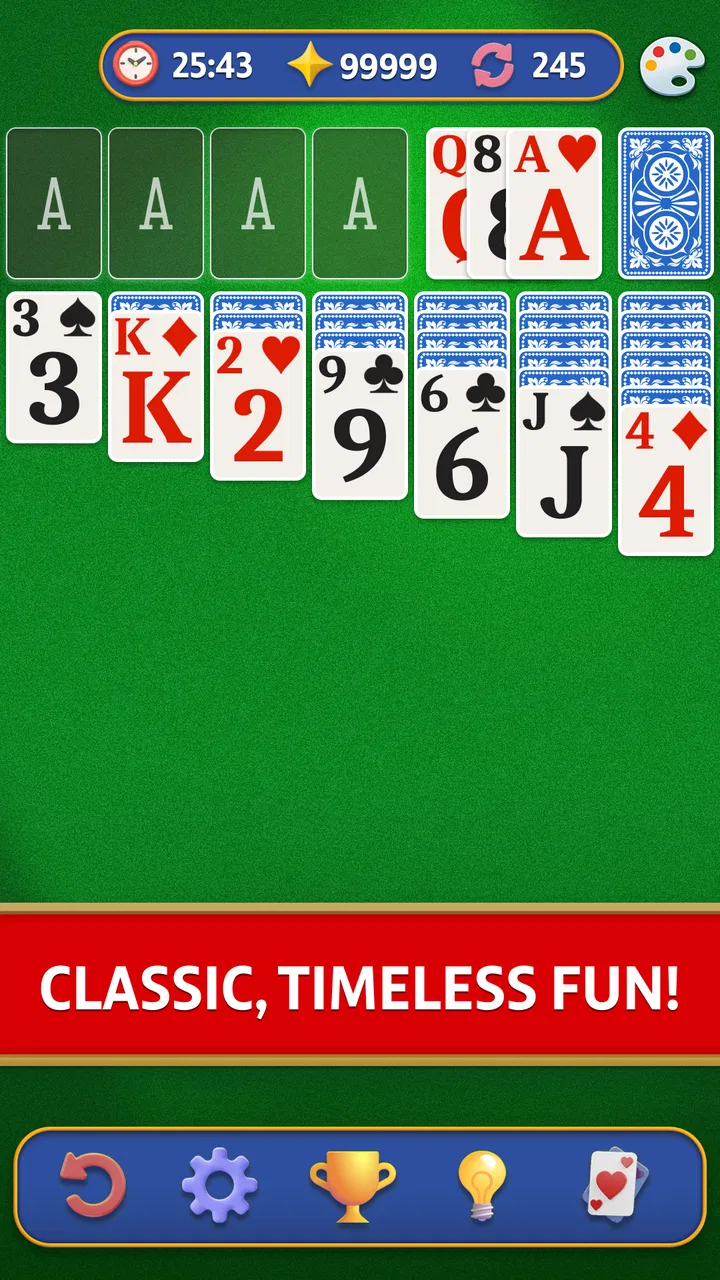
Klondike works because every move asks a small question. Should I expose a hidden card, move a visible sequence, draw from the stock, or reserve a space for a king? In this game, that rhythm remains the main attraction. I can open a round, scan the tableau, and begin making decisions without learning a new rule set or navigating through a crowded collection of modes.
That makes it especially comfortable for short sessions. I can play while waiting for an appointment, during a quiet commute, or at the end of the day when I want something mildly engaging without the pressure of a timed action game. The game asks for attention, but not the kind of attention that leaves me feeling rushed. A good round becomes a small exercise in planning and patience.
The familiar layout also helps the game feel accessible to different ages. Someone who already knows Klondike can start immediately, while a newer player can understand the objective through the cards themselves. The Everyone content rating fits that broad audience. I would still recommend that beginners take their time rather than treating every available move as automatically correct, because a careless early decision can make the rest of a deal much harder.
Why the logic remains satisfying
The best moments come from delaying an attractive move. For example, moving a black card onto a red one may be legal, but it may also block the only route to revealing a hidden card. I found that the game rewards looking beyond the next available placement. The useful question is not simply “Can I move this card?” but “What will this move allow me to uncover or preserve?”
That makes the experience more thoughtful than its relaxed presentation might suggest. A successful round often depends on keeping several possibilities open. I try to avoid filling an empty tableau space too quickly, especially if a king is not ready to occupy it productively. I also pay attention to whether drawing from the stock will improve my choices or merely postpone an awkward position.
These habits are valuable for anyone using the game as a light logic exercise. The app does not need to announce a lesson for the player to practice sequencing, risk assessment, and memory. I gradually became more aware of which cards had already appeared and which columns deserved priority. That kind of improvement feels earned because it comes from understanding the structure of Klondike rather than from collecting upgrades.
Small habits that make difficult deals more manageable
One useful approach is to search for hidden-card opportunities before building long visible sequences. A long stack can look productive, but it may also lock away cards that would be more useful elsewhere. I usually prefer a move that exposes a face-down card, provided it does not destroy an important alternating sequence.
Another practical habit is to examine the available stock with a plan. Drawing immediately whenever I get stuck can lead to a cycle of random-looking moves. Instead, I try to identify which tableau card I want to reach and then consider whether the cards before it can be used without closing off better options. This is a small change, but it makes the game feel less like tapping through cards and more like managing a limited set of choices.
I also found it helpful to leave a mental note of cards that are temporarily inaccessible. If a useful low card is buried in the stock or under a sequence, I avoid making a move that depends on it appearing soon. This prevents a common frustration: building an entire plan around a card that the current deal may not offer at the right moment.
What the developer’s approach gets right
DNA Mobile Group has kept the core identity recognizable. The game is not trying to turn Klondike into a different genre, and that restraint is one of its strengths. The central activity remains easy to reach, easy to pause mentally, and familiar enough that the player’s attention goes toward the puzzle rather than toward learning an elaborate system.
The current version is 28.5.2, and the game supports devices running Android 9 or later. For someone deciding whether an older Android phone or tablet can handle it, that requirement is important to check before installing. I would also keep the app updated when possible, particularly if the game is being used regularly, because card games benefit from a stable, predictable playing experience.
The store summary presents the game as a way to relax while testing logic, and that description matches my experience in spirit without capturing the finer detail. It is relaxing when I accept that not every round will be won. It becomes less relaxing when I replay a poor decision repeatedly, so part of enjoying it is treating each deal as a compact puzzle rather than as a guaranteed success.
The main weakness: simplicity can become repetition
The same focus that makes the game approachable also limits its long-term variety. If your idea of a card app includes several solitaire variants, elaborate challenges, social competition, or a strong progression system, this may feel narrow. Its identity is built around Solitaire Klondike, so players looking for constant novelty should compare it with a broader card collection before settling on this one.
Even within Klondike, repetition can become noticeable for people who play for long stretches every day. The basic decisions remain interesting, but the surrounding experience does not replace the need for personal goals. I found the game more enjoyable when I used it for short sessions or focused on improving my decision-making rather than grinding through round after round.
There is also a financial point to consider. The game is free, but it includes in-app purchases ranging from $1.99 to $19.99 per item. That does not make the free experience unsuitable, yet it means a player who wants an entirely purchase-free environment should pay attention to the app’s purchase prompts and decide in advance whether optional spending fits their preferences. For a casual player, the sensible approach is to treat purchases as unnecessary extras unless a particular option genuinely improves the way they play.
I would not describe that as a deal-breaker, but it is part of the real trade-off. Free access makes the game easy to try, while the presence of paid items may be less appealing to someone choosing a card game specifically to avoid monetization. A different alternative may be better for that person if its business model feels more comfortable.
Who will get the most from this game
I think this is a strong fit for someone who already knows Klondike and wants a dependable mobile version for quiet moments. It also suits players who enjoy puzzles without timers, story campaigns, or complicated controls. If you like the feeling of sorting a messy situation into a clear sequence, the game offers that satisfaction in a compact form.
It can also work well for a family member who wants a familiar card pastime on a modern device. The Everyone rating and recognizable rules make it less intimidating than a strategy game with a long tutorial. I would still explain the basic objective to a complete beginner, especially the importance of uncovering hidden cards and building the foundation piles in order. Once those ideas are clear, the game is easy to revisit.
A realistic everyday use case is a short evening break after work. I might play one deal while waiting for tea to steep, then stop after the round instead of opening a feed that keeps demanding attention. Another useful situation is travel without reliable entertainment: Klondike gives me something mentally active but not emotionally demanding. It is also suitable for a few minutes before sleep if card puzzles help you unwind, although anyone who becomes competitive with their own results may find it more stimulating than expected.
Who should choose another card app
I would point elsewhere if your priority is variety. Players who want FreeCell, Spider, Pyramid, or other formats in the same installation may prefer a multi-game solitaire package. That kind of alternative is more convenient when you want to switch rules rather than stay with one familiar structure.
I would also suggest comparing options if you need a highly customizable experience. Some players care deeply about visual themes, detailed statistics, advanced undo controls, daily challenges, or other tools that shape a longer-term routine. I would not choose this game solely on the assumption that every one of those extras is central to the experience. Its appeal is the direct Klondike loop, not an extensive management layer around it.
Likewise, competitive players may be happier with an app built around leaderboards, head-to-head matches, or timed targets. Solitaire Klondike is better when the opponent is the puzzle itself. That makes it calmer, but it also means it may not provide enough urgency for someone who needs external competition to stay interested.
How it compares with playing cards or broader alternatives
Compared with a physical deck, the app is more convenient and less demanding to set up. I do not need a table, enough space to lay out seven columns, or time to gather cards after a round. The digital format is particularly useful when I want to play briefly and close the game immediately. A physical deck still has a tactile charm, though, and people who enjoy handling cards may find the screen less satisfying.
Compared with a broad solitaire collection, this game has a clearer purpose. I do not spend time deciding which mode to launch; I open it because I want Klondike. That focus can be a benefit when I want a familiar routine, while a collection is more practical for a household with several different preferences.
Compared with a competitive card game, the pace is more forgiving. There is less pressure to react quickly, and the main skill is planning rather than bluffing or reading another player. That makes it a better companion for relaxation, but a weaker choice for anyone looking for social interaction or unpredictable opponents.
Practical advice before you commit
Before installing, check that your Android device meets the minimum requirement of Android 9. The game is free to download, so trying a few rounds is a reasonable way to judge whether its focused format suits you. I would not decide based only on the high average rating, because enjoyment depends heavily on whether you want one classic mode or a larger selection of card games.
During play, avoid measuring the app only by how quickly you win. A more useful test is whether it gives you satisfying decisions when a round becomes awkward. If you enjoy reviewing the board, spotting a missed opportunity, and trying a different order of moves, the game has lasting value even when a deal does not work out.
If you are sensitive to optional purchases, set your own boundary before playing. The listed purchase range runs from $1.99 to $19.99 per item, so the free starting point is inviting, but the presence of paid items should be part of your decision. I would recommend keeping the focus on the card puzzle unless you already know that an optional extra is worth the cost to you.
My final recommendation
After using it as a focused Klondike game, I see Solitaire Klondike Card Game as a solid recommendation for calm, familiar card play. Its best quality is not an oversized feature list; it is the way the basic puzzle remains readable and rewarding. I can pick it up for a short break, think through a few moves, and leave without needing to manage a complicated account of progress or learn a new system.
The limitations are equally clear. The single-mode focus may feel repetitive, and the in-app purchase range means the free label does not tell the entire story of the experience. Players seeking a broad solitaire library, deep customization, or competitive interaction should look at alternatives designed around those priorities.
For everyone else, especially people who want a familiar card puzzle for Android that combines quiet play with genuine decision-making, this is an easy game to try. I would recommend it to a friend who enjoys Klondike and wants a convenient digital version, with one condition: approach it as a thoughtful short-session pastime, not as an endless content platform. In that role, DNA Mobile Group’s game does exactly what I want from it and does so without getting in the way of the cards.
FAQs for Solitaire Klondike Card Game
01What are the key features of Solitaire Klondike Card Game?
Solitaire Klondike offers a classic card game experience with a modern twist. Key features include customizable card faces and backgrounds, daily challenges, and an intuitive interface for easy play. Additionally, the game includes hints and undo options, making it accessible for beginners and pros alike.
02Is Solitaire Klondike available offline?
Yes, Solitaire Klondike is designed to be played both online and offline. This means you can enjoy the game without an internet connection, making it perfect for travel or when you're in areas with limited connectivity.
03Are there in-app purchases in Solitaire Klondike?
Solitaire Klondike is free to download and play but offers in-app purchases. These purchases can enhance your gaming experience by providing access to additional themes, removing ads, or unlocking special features. However, they are optional and not necessary to enjoy the game.
04How does Solitaire Klondike handle ads?
The game includes ads to support its free version. Ads typically appear between rounds or at the bottom of the screen. If you prefer an ad-free experience, there is an option to purchase an ad-free version through in-app purchases.
05What platforms support Solitaire Klondike?
Solitaire Klondike is available on both Android and iOS platforms. It is optimized for a wide range of devices, ensuring smooth gameplay on smartphones and tablets. You can download it from the Google Play Store or the Apple App Store.
Pros
- Intuitive controls make gameplay smooth.
- Classic design appeals to traditional fans.
- Offline mode available for on-the-go play.
- Daily challenges keep the game fresh.
- Customizable card backs and themes.
Cons
- Ads can interrupt the gaming experience.
- Limited hints in free version.
- No multiplayer or social features.
- Occasional lag on older devices.
- In-app purchases for additional themes.

Solitaire Klondike Card Game
Gallery